
A stack: paired products.
In community usage, “stack” can mean using separately supplied components together. Their amounts remain separate.
The Wolverine Stack pairs BPC-157 with a material sold as TB-500. Clinics and communities discuss tendon, ligament and joint recovery; the nickname can mean separate vials on different schedules or one fixed-ratio blend.
Research focus: Soft-tissue recovery, movement and joint-comfort interest.
Choose a compound to open its research, documentation and calculator.
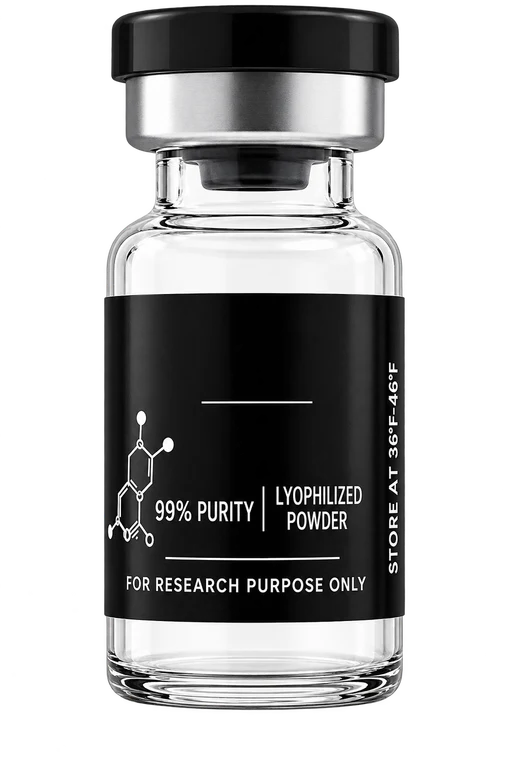
No FDA-approved drug product for this catalog material. Compounding eligibility and approval are separate questions.
Official source ↗BPC-157 has short animal IV/IM PK; a reliable human TB-500 value is not established here. A blend cannot be assigned an average half-life.
Half-life describes concentration falling by half. It does not set a dosing interval, a storage period or a drug-test detection window.
Kinetics source ↗No validated common diluent for this exact material was established by the sources reviewed here. Component recipes do not establish blend compatibility.
Bacteriostatic water contains a preservative; plain sterile water does not. Preservative presence does not by itself establish compatibility or a mixed medicine’s usable period.
Preparation source ↗Interest in tissue and joint recovery motivates this pairing, but the nickname is not evidence of a proven healing effect or synergy. Published component research, a small clinic report and provider descriptions answer different questions.
Check that a source concerns the same molecule, formulation, route and population. A study of cells, animals or a different product cannot confirm the contents of a vial.
Component experiments, a small clinic report and named provider descriptions; the pairing’s effects are not established by its nickname.
BPC-157 is a 15-amino-acid peptide. A laboratory tendon study examined migration and growth in rat tendon cells and explants. Read the original laboratory study ↗.
In community usage, “stack” can mean using separately supplied components together. Their amounts remain separate.
A premixed vial contains both components in a stated ratio. Every calculated portion contains both: changing the volume changes both amounts together. “Wolverine” does not tell you that ratio.
FDA’s 2026 briefing describes TB-500 as a seven-amino-acid fragment and notes inconsistent naming in marketed materials. Full-length thymosin beta-4 contains 43 amino acids. Findings about one cannot establish the effects of the other.
Read FDA’s identity assessment ↗These are named provider descriptions, not recommended formulations or independently tested contents. Clinic and supplier pages have commercial interests; inclusion is not a product endorsement.
Provider descriptions use different mass ratios. The colored bars show each component’s share of the advertised total.
5 mg BPC-157 + 10 mg TB-500
15 mg combined mass in this description.
10 mg BPC-157 + 10 mg TB-500
20 mg combined mass in this listing.
Other names you may encounter: BPC TB blend, Wolverine Stack, Wolverine Blend, Wolverine peptide.
Learn to read a study →Each entry keeps one schedule’s amount, frequency and cycle together. Community references, individual reports, clinical trials and prescription products describe different kinds of use. A missing duration or break stays marked as not reported.
Amounts describe mass in mg or mcg. Syringe units describe volume and depend on concentration. A cycle break is different from days off within a week.
Choose an option to explore its amounts, timing and cycle.
| When | Amount & frequency |
|---|---|
| Weeks 1–4 | 250–500 mcg once daily |
| Weeks 5–8 | 250 mcg once daily |
This is the BPC-157 component of the separate-vial pairing, not the combined mass of a blend.
| When | Amount & frequency |
|---|---|
| Weeks 1–4 | 2.5 mg twice weekly (5 mg/week) |
| Weeks 5–8 | 2.5 mg once weekly |
The TB-500 component follows a different frequency from daily BPC-157.
Combined mass: 600–1,000 mcg (0.6–1 mg) per injection. The fixed ratio cannot reproduce different daily/weekly component schedules.
1.2 mg combined mass per injection; 3 mg of each component over a five-day week.
1 mg combined mass per capsule. An injection cycle is not assigned to this oral option.
1–2 mg combined mass per administration. This fixed-ratio option differs from the separate-vial pairing.
Community identifies source origin. It does not certify independent funding, medical credentials or the strength of a claim. Source types distinguish published reports, professional explanations and public discussions.
Explore reports, explanations and discussions from medical practices, researchers, suppliers and community members. The badges identify the source’s origin and evidence type.
How to read these source labels →Not a controlled trial or a representative community survey. Claims of improved combined healing are not established by the reviewed human evidence.
Source relationship: Commercial peptide-tracking app publisher.
The online guide describes an eight-week example in which BPC-157 remains daily and TB-500 changes from twice weekly to weekly.
Online proposal · separate components
The source calls 20 injections a month; this is four weeks at five injections weekly. It does not demonstrate clinical equivalence to separate-component schedules.
Source relationship: Commercial aesthetics and wellness provider offering the treatments discussed.
A clinic-specific blend and intermittent schedule, with its concentration arithmetic explained in the guide.
Clinic proposal · fixed-ratio blend
Its account of forum practice is not a survey. A prescribing-service description does not establish drug approval, efficacy or equivalence to a trial.
Source relationship: Commercial provider marketing the blend and related services.
PeRx describes a different concentration and six-week cycle, illustrating why the Wolverine nickname does not define one protocol.
Provider description · commercial service
The daily-total table and once-or-twice-daily prose are not fully consistent. These descriptions are not trial-validated schedules.
Source relationship: Commercial clinic discussing services and proposed uses.
A clinic overview compares oral and injected BPC-157 and discusses Wolverine and other pairings. Its amounts appear in the BPC-157 dosage snapshot.
Clinic explanation · commercial treatment provider
The introductory frequency and cycle wording differs from the detailed schedule. The page does not establish that intermittent use matches daily use.
Source relationship: Commercial clinic offering the treatments described; inclusion is not an endorsement.
The detailed schedule describes once-daily use on five days per week. The article also discusses individualized Wolverine pairings.
Clinic explanation · commercial treatment provider
No control group, randomization or validated outcome scale; the combination subgroup had only four people. Reported improvement cannot establish cause, safety or superiority of the combination. The abstract names thymosin beta-4, not an identified TB-500 fragment. It does not validate a subcutaneous Wolverine schedule.
Source relationship: Report from a treating medical practice. Funding and conflicts require checking in the full paper; independent funding is not established here.
This retrospective report describes knee-joint injections and telephone follow-up for 16 patients. Twelve received BPC-157 alone; four received BPC-157 with thymosin beta-4. Three of those four reported pain improvement.
Retrospective · no control group · thymosin beta-4 identity, not verified TB-500
The page describes a service and proposed benefits; it does not report a controlled trial of this combination. Its ratio does not verify another product’s identity or contents.
Source relationship: Commercial clinic offering the treatment it discusses.
The clinic uses “Wolverine blend” for a combined BPC-157/TB-500 preparation and describes a 5 mg + 10 mg composition. This is one provider’s formulation, not a universal definition.
Clinic explanation · commercial treatment provider
An explainer about proposed uses is different from original participant data. Recovery claims need evidence for the actual combination, material and route.
Source relationship: Commercial clinic and wellness-service provider.
This article explains how BPC-157 and TB-500 became associated with the Wolverine nickname in recovery and performance discussions.
Clinic explanation · commercial wellness services
Mechanism descriptions and clinical marketing do not demonstrate that the blend heals an injury or is more effective than either component.
Source relationship: Commercial aesthetics and wellness clinic.
The clinic discusses the BPC-157/TB-500 pairing under the Wolverine name. It is useful for understanding terminology readers may encounter.
Clinic explanation · commercial aesthetics services
A listing is evidence of how a product is advertised, not confirmation of its contents or clinical effectiveness. The page uses fragment and full-length thymosin terminology; molecular identity needs separate documentation.
Source relationship: Commercial supplier selling the blend; labeled for research use.
This seller lists equal-mass BPC-157/TB-500 variants, including 10 mg + 10 mg. That differs from the 1:2 ratio described by Moonshot.
Vendor description · advertised product composition
A peptide name and vial mass cannot determine a compatible diluent, powder displacement, storage temperature or discard date. Follow the exact product’s instructions and your pharmacist’s directions.
The injection guide concerns clinician-prescribed subcutaneous medicines; it does not establish that a research-labeled material can be injected.
Start with the formulation: dry powder, prepared solution, pen, tablet and topical product can have different instructions.
These calculations explain reported formulations; they do not establish a compatible diluent, sterility, stability or preparation recipe. A label must identify each component and its concentration. Use product-specific handling and discard instructions.
With 10 mg BPC-157 + 10 mg TB-500 in a final 2 mL, each component is 5 mg/mL; the combined concentration is 10 mg/mL. On a U-100 syringe:
The same 10-unit volume at PeRx’s stated 3 mg/mL per component would contain 0.3 mg of each. Units alone cannot identify the amount. A 1:2 blend also changes the split; enter both documented masses separately and select which component your calculator target refers to.
Explore both component amounts in the calculator ↓General health habits and consistent observations help you assess changes. They are not evidence that a peptide’s effects will be amplified.
A diagnosis, progressive rehabilitation and an appropriate return to activity help put pain and function changes in context.
NIAMS · injury treatment and recovery ↗Use a regular sleep/wake schedule and note changes in sleep quality alongside symptoms or training.
CDC · sleep habits ↗What to record: Record pain, movement, training load and rehabilitation together. Feeling less pain and demonstrating structural healing are different outcomes.
Check dates are editorial references, not a medical review certificate. Labels and evidence can change; consult the linked current document.
The reviewed sources do not establish a controlled human trial validating Wolverine schedules. The small clinic report concerns knee-joint injections and thymosin beta-4, rather than a verified TB-500 fragment.
FDA’s 2026 TB-500 assessment found no human clinical studies of the identified fragment. These compounding briefings are not product approvals.
PeptIQ’s example lasts eight weeks and describes subcutaneous use. Its BPC-157 amount is a daily total. Read the complete online proposal ↗
PeRx’s overview of forum conventions instead describes 250–500 mcg BPC-157 once or twice daily. That wording is not equivalent to 250–500 mcg per day. It is the provider’s characterization of online practice, not a representative survey. Compare the provider’s wording ↗
Spell out “twice weekly” or “every two weeks”: “biweekly” can mean either. A broad 6–12-week range cannot establish a standard cycle or a proven washout period.
Perfect B describes subcutaneous abdominal use at night. Local placement, bedtime and cycling rationales are source proposals; the reviewed studies do not establish a best injection site, time of day or break that improves outcomes. Read the clinic’s instructions ↗
Another provider, another schedule: PeRx describes 0.6 mg of each component per injection, Monday–Friday, for six weeks followed by six weeks off, with no loading phase. Its 3 mg/mL concentration for each component differs from Perfect B’s example. Read PeRx’s full description ↗
Every portion of a fixed-ratio blend contains both compounds. Increasing its volume to match a standalone TB-500 amount also increases BPC-157. Matching a weekly total does not establish the same effects as a different schedule.
Competitive sport: WADA’s 2026 list prohibits BPC-157 under S0 and thymosin beta-4 derivatives such as TB-500 under S2, at all times. Read the original prohibited list ↗
Opening values and worked examples illustrate arithmetic; they are not preparation instructions or recommended amounts. Selecting a compound labels the calculation and does not supply a dose or powder-volume correction.
Enter the documented vial mass, preparation information and target amount to see how mass and volume connect.
Enter the documented BPC-157 and TB-500 masses separately, then select the component your target refers to. The result shows both component amounts in the same volume. Each concentration depends on its own component mass.
Estimate · assumes 1 mL added = total volume
For BPC-157
1,000 mcg
Theoretical · before losses
0.2 mL
After 5 full doses
Illustration only · calculated value, without rounding
BPC-1571 mg
TB-5001 mg
Saved calculations stay on this device.
Concentration = mass ÷ final volume
5 mg ÷ 1 mL = 5 mg/mLVolume = target mass ÷ concentration
1 mg ÷ 5 mg/mL = 0.2 mLU-100 markings = volume × 100
0.2 mL × 100 = 20 unitsComplete portions = floor(vial mass ÷ amount per portion).
Displayed numbers are rounded for readability; the calculation uses unrounded values.
Already have the concentration? Find the matching mL and U-100 syringe reading.
Need the concentration first? Use the Reconstitution tab.
5units
0.05 mL · 0.25 mg
0.25 mg ÷ 5 mg/mL = 0.05 mLU-100 units = mL × 100Example inputs are editable. The reading is calculated without rounding to a physical graduation.
Convert mass or liquid volume. U-100 markings always refer to a 100-units-per-mL scale.
1,000mcg
For mass → syringe volume, switch to Dosage and enter a concentration.